Recommended: 900x500
When someone dies with a valid will in Texas, the will names an executor , the person responsible for managing the estate. But naming someone executor in a will is not enough by itself. The executor cannot actually sell property, access bank accounts, or pay debts until a Dallas County probate court formally authorizes them to do so.
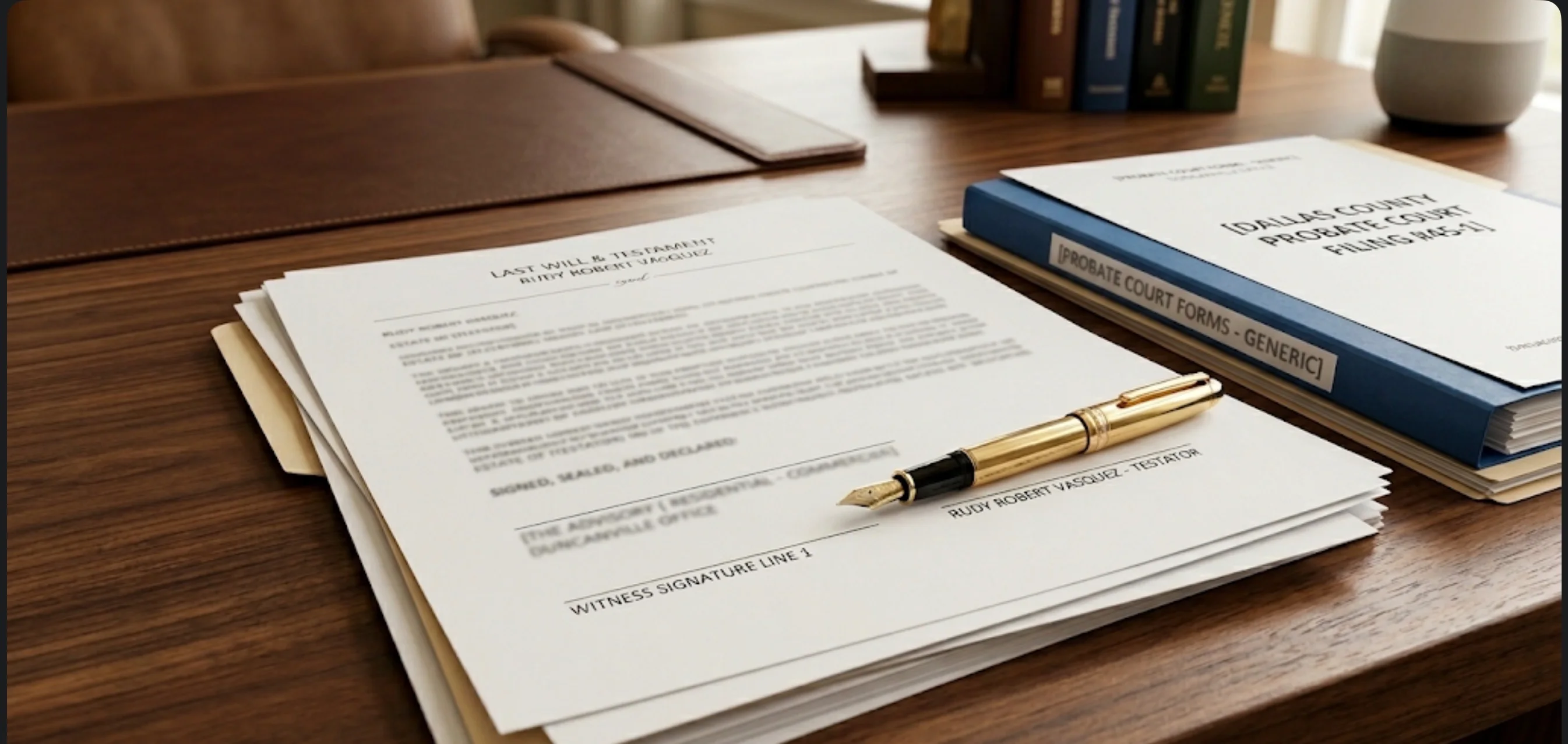
Letters Testamentary are that authorization. The Dallas County Probate Court reviews the will, confirms it is valid, and then issues Letters Testamentary to the executor named. With those letters in hand, the executor can act on behalf of the estate , including signing a deed, executing a contract, and closing a sale of inherited real property.
The process starts at the George Allen Courts Building at 600 Commerce St in downtown Dallas. The executor (or their attorney) files an Application to Probate Will and Appoint Executor with the Dallas County Probate Court. The court sets a hearing date , which, given the current docket backlog, typically means waiting 4–8 weeks for an available slot.
At the hearing, the judge reviews the will for validity, hears any objections, and if everything is in order, issues an Order Admitting Will to Probate and Authorizing Independent Administration. The executor then receives the actual Letters Testamentary , a formal document from the court bearing the county clerk’s seal.
Texas gives executors a choice between independent and dependent administration. Independent administration is the more common path for straightforward estates , it allows the executor to manage and sell estate property without court approval for every action, which significantly speeds up the process. Dependent administration requires court approval for major transactions, which adds time and cost.
For estate property sales, independent administration is almost always the right choice. It allows us to go directly from contract to closing without additional court hearings. If the estate’s creditors are not objecting, most Dallas County probate attorneys will recommend independent administration.
When someone dies without a will in Texas, there is no executor , there is an administrator. The equivalent of Letters Testamentary in an intestate estate is called Letters of Administration. The process is similar: file an application with the Dallas County Probate Court, set a hearing, and receive court authorization. The difference is that the court determines who the administrator is based on Texas intestacy law, rather than following the deceased’s written instructions.
We can begin discussions, negotiate terms, and even sign a purchase contract , contingent on the issuance of Letters Testamentary. The contract cannot close until the executor has the letters and can legally sign the deed. This is normal practice for inherited property transactions in Dallas County, and it allows us to have everything ready to close the moment the court issues authorization.